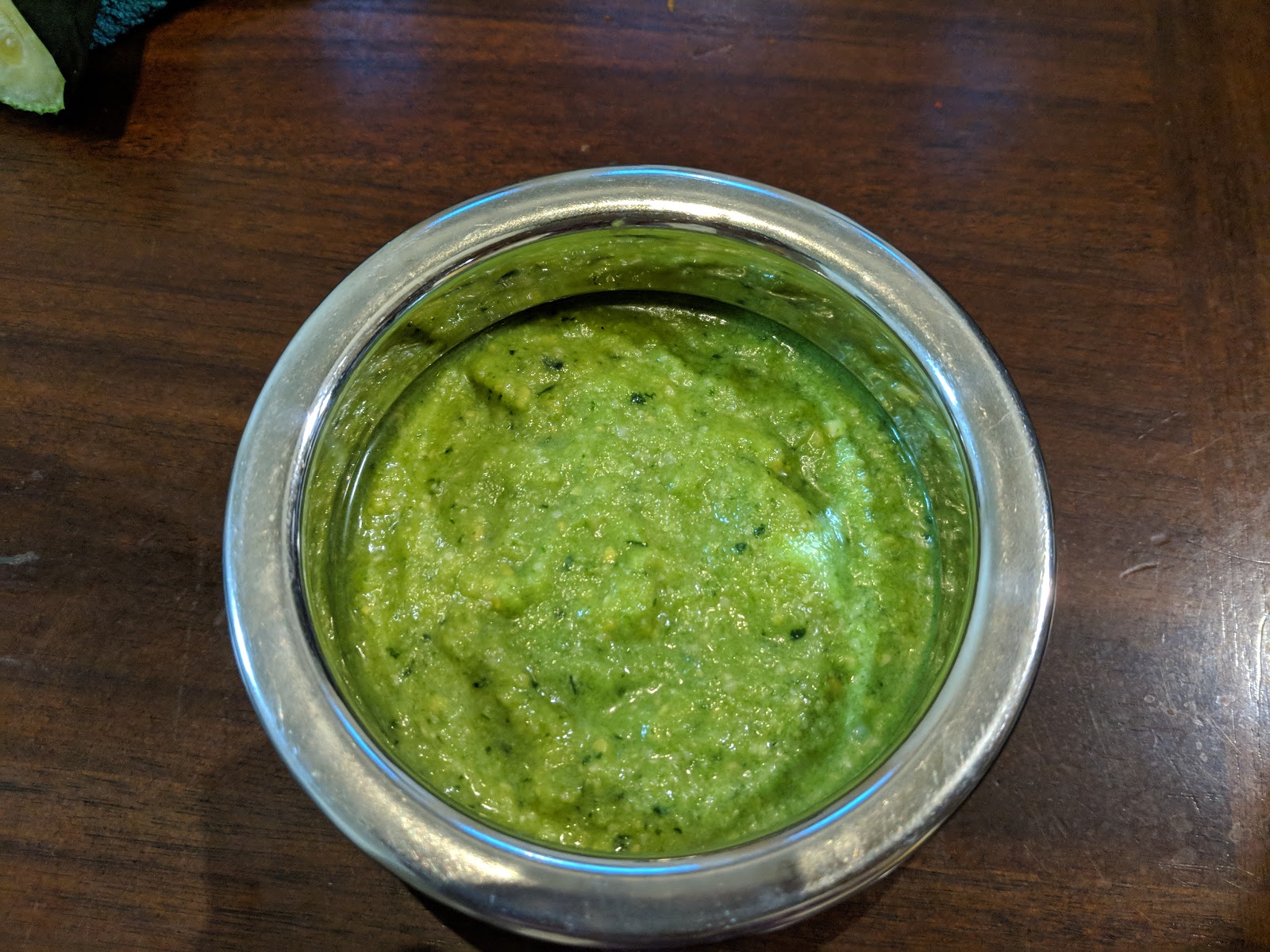
Wednesday, March 10, 2021

Pudalangai Stir fry

 Pudalangai stir fry


The humble Pudalangai, or snake gourd, as it is called, is a nutrient powerhouse of key vitamins and minerals.It is a source of soluble fibre, and has consierable amount of vitamins such as Vitamin A, C, Ribolflavin, Thiamine and Niacin.

It aids in the detoxification process, and removal of the bad (LDL)cholesterol from the body.


Now coming to the recipe, 


Ingredients:


Pudalangai- 1.5 cups (chopped into slender crescents)

Salt- to taste


Ingredients to be ground into a paste:

Cumin seeds- 1.5 tsp

Shredded coconut-1 tbsp

Green chillies- 1 (depending on your tolerance levels)


For seasoning:

Oil-2 tsps

Mustard seeds -1 tsp

Red chillies- 1 or 2 (optional)


Notes:

A key factor which determines the cooking time here, is the quality of the pudalangai. Some pudalangai varieties have a thicker skin, and take a longer time to cook. The tender, young varieties do not take as much time to cook.


Preparation:

Take 2 tsps of oil in a kadai. Drop in the mustard seeds, and once it splutters, add the red chillies (if using).

Add the chopped pudalangai crescents, and saute on a medium flame. 

Make a smooth paste of the cumin seeds, coconut shreds and the green chillies, adding very little water. 

Add the prepared paste to the vegetables cooking in the kadai. Give a good stir to mix in the flavors.

Cook the vegetable covered. Check to see if the pudalangai is cooked tender . If not, sprinkle some water, and cook until the vegetable is done.

Transfer to a serving bowl, and enjoy this healthy stir fry, as a side for rice.


Notes:

1. Onions can be added,if preferred. If adding onions, add them, after the mustard splutters, before adding the pudalangai pieces.


Monday, March 8, 2021

Masoor -Moong dal thogayal

 The recipe, I am sharing today has Masoor dal and moong dal as the key ingredients. As we know, lentils are very good sources of protein.

Apart from toor dal and channa dal, these 2 dal varieties lend themselves pretty well, to use in thogayal.


Ingredients:

Masoor dal-1/2 cup

Moong dal-1/2 cup

Green chillies/Red chillies- 2 (depending on how mild/spicy the thogayal needs to be)

Asafoetida-a  small pinch

Tamarind paste- 1 tsp

Shredded coconut-1 tbsp (optional)

Curry leaves- a tiny sprig (optional)

Salt- to taste

Oil-2 tsps


Preparation:

In a kadai, add 2 tsps of oil. Add both the lentil varieties (masoor and moong), green chillies. Add in a tiny pinch of asafoetida and a tsp of tamarind paste. Saute on a low to medium flame, until the dals begin to appear slighly browned. Turn off the stove.

Add the shredded coconut (if using), and let it wilt in the heat of the pan. Once the mixture has cooled down,transfer the contents to a mixer, and grind to a coarse paste, adding very little water, if needed.

Add the needed salt to taste.

Transfer to a serving bowl. This healthy thogayal pairs up well with hot rice, and can also be served as a side for dosa/idli.

Notes:

1. A clove or two of garlic can be added for a more robust flavour.

2. This thogayal can be prepared with just 1  dal variety as its base (Toor dal,Channa dal, Moong dal, Masoor dal).

3. Additionally, you could season the thogayal. Add in a tsp of oil to a kadai, and tip in a tsp of mustard seeds.Once it splutters, pour the seasoning into the thogayal and mix well. This makes the thogayal more flavourful.

Wednesday, January 23, 2019

Tomato Pulav with Cucumber Raita

Tomato Pulav with Cucumber Raita


Tomato Bhath with Cucumber Raita and store bought chips


This is a very easy to make rice variety, and can be a lifesaver, when time is a constraint.

Jumping on to the recipe,

Ingredients:

Basmati rice- 2 cups
Tomatoes- 4 to 5 (roughly chopped)
Onions- 1 (finely chopped)
Turmeric powder- 1 tsp
Garam Masala- 1 tsp (optional)
Cilantro- a handful (for garnish)
Salt- to taste
Ghee/Oil- 2 tbsps.

Notes:

1. After rinsing the rice thoroughly, keep it soaked in water for 1- 2 hours prior to cooking. A longer soaking time facilitates quicker cooking.
2. You can use any oil of your choice. Ghee really brings out the delicate flavors in this rice.

Ingredients for the Masala Paste:

Cloves- 2 to 3
Cinnamon powder- 1/2 tsp
Ginger- a small knob
Garlic- 4 to 5 cloves
Cardamom- 2 to 3 pods
Green chillies- 2 (adapt it to your spice preference)
Pearl onions/Shallots- a  handful

Grind the above mentioned ingredients to a smooth paste, adding the needed water. Adding shallots really enhances the flavor in this pulav variety.

Spices for seasoning:

Cumin seeds- 2 tsps
Fennel seeds- 1 tsp
Bayleaf- 1 shredded

Preparation:

In a kadai, heat 3 tbsps of ghee. When hot, add in the bay leaf, cumin seeds and the fennel seeds. When they start to crackle, tip in the onions. Fry the onions until they appear translucent. Add the tomatoes now, and fry until the tomatoes turn slightly mushy. Add the ground masala paste, and fry over a low to medium flame, until the raw smell of the ground paste is minimized.

Add the salt, turmeric powder,and garam masala (if using). Stir well.

Drain the water from the basmati rice, and slowly add the rice, with the water needed for cooking.

Stir again, after adding the rice. Cook covered over a medium flame until the pulav is fully done.

Garnish with cilantro leaves.

Fluff the rice gently with a fork, once done.

Serve this aromatic, yummy pulav with a raita of your choice.

I served it with refreshing Cucumber raita and some store bought chips.

Tuesday, January 22, 2019

Arugula greens poricha kootu

Arugula greens poricha kootu:


Arugula Greens Poricha Kootu


Arugula is one of the leafy greens variety, that is a immune enhancer. It is a nutrient dense leafy green, that confers a whole lot of health benefits.

Its rich phytonutrient content makes it a potent anti inflammatory food. It is immensely beneficial for the eyes, due to its high carotenoid content. It also helps in promoting gut health.

It is particularly rich in Vitamin A, K and folate.

This Poricha kootu boasts of Arugula as the star ingredient. This medley of cooked arugula with steamed toor dal and moon dal is a treat for the taste buds.

Let's proceed to the ingredients

Ingredients:

Arugula Greens- 1 bunch (stalks removed, thoroughly rinsed and roughly chopped)
Toor dal- 1/4 cup
Moong dal- 1/4 cup
Turmeric powder- 1 tsp
Asafoetida-a small pinch
Salt- to taste
Oil/Ghee- 2 tsps

Notes:

1. After rinsing the dals thoroughly, soak them in water for at least 4 - 5 hours prior to cooking. These dal varieties, in fact cook pretty quickly. Soaking lentils for a longer time, prior to cooking makes the nutrients more bio available. Folks who do not tolerate lentils very much, due to digestive distress, might try cooking well presoaked lentils, to see if it makes any difference.

Ingredients for the spice paste:

Grated coconut- 3 tbsps
Green chillies- 2 (adapt it to your spice preference)
Cumin seeds- 2 tsps

Grind the above mentioned ingredients to a smooth paste, adding needed water. This is the spice paste for this kootu.

Spices for seasoning:

Mustard seeds-1 tsp

Preparation:

Take the chopped greens,and soaked lentils, in a pressure cooker, and cook it for a tleast 3 whistles.

Once the pressure subsides, mash the cooked lentils and greens, with the back of the ladle.

In a kadai, heat 2 tsps of oil/ghee. When hot, add the mustard seeds and a pinch of asafoetida. Once, it is done spluttering, reduce the flame to medium, and slowly tip in the cooked lentils-greens mixture. Add the spice paste already prepared, and the needed salt.

Adjust the consistency of the kootu, and add water, if needed. Stir well to bring in all the flavors together. Cook covered for 5 minutes, over a medium flame.

Transfer the kootu to a serving bowl. This incredibly healthy kootu makes a great side for rotis. It can be had as an accompaniment for rice as well.

Notes:

1. A combination of leafy greens and dal varieties. can be used to make this kootu.


Monday, December 10, 2018

Gluten free,vegan Chickpea flour bread

 Gluten free,vegan Chickpea flour bread

Gluten free Chickpea flour bread


I am always on the lookout for  gluten free recipes for my son, and this recipe is definitely a keeper.

I got this recipe at https://www.rhiansrecipes.com/gluten-free-vegan-bread/

This bread comes with an added bonus, in that there is zero sugar, in any form, that is added. It is yeast free as well.

Once you have all the ingredients on hand, baking this bread is relatively easy. 

It tastes great topped with hummus. A slathering of organic grass fed butter, and jam would be yummy as well.

Let's take a look at the ingredients

Wet Ingredients:

Dairy free milk of your choice- 1 cup. I used full fat coconut milk
Water- 2 oz (60 mls)


Apple Cider Vinegar- 1 tbsp 

Dry Ingredients:

Chickpea flour- 1.5 cups
Rice flour- 1 cup
Tapioca flour- 2 tbsps
Baking powder- 4 tsps
Baking soda- 1/4 tsp
Sea salt- 1/4 tsp


Notes:

1. Chickpea flour has a tendency to absorb a lot of moisture. The batter will seem runny, while placing it in the oven. 

2. Tapioca flour is a pretty versatile gluten free flour. It is made from cassava. a plant native to South America. It is a starchy flour.

3. Make sure to add the requisite 4 tsps of baking powder in this recipe. Aluminium free baking powder is best, as aluminium is a neuro toxin

Sliced chickpea flour bread


Preparation:

1. Preheat the oven to 350 degrees Fahrenheit. Grease the edges of the bread pan with a non stick cooking spray. Apply liberal amount of cooking spray to the bottom of the loaf pan, to prevent the bread from sticking.

2. In a large mixing bowl, gather all the dry ingredients. Mix gently with a spatula.

3. In another bowl, mix in the flours (chickpea, rice and tapioca), and mix uniformly. Add the baking powder, baking soda and sea salt.

4. Now add the wet ingredients to this flour mix. Whisk everything well together, to make a smooth bread batter. This batter will seem a bit runnier.

5. Carefully pour the batter in the greased bread loaf pan.

6. Bake at 350 degrees Fahrenheit for 50 minutes.

7.  The bread would have risen. Check to see if the bread is cooked evenly, by gently inserting a tooth pick in the center. If it comes out clean, the bread is done.

8. Let the bread cool for atleast 2 hours prior to slicing.

Enjoy this healthy bread as is, or toasted, with a topping of your choice.


Tuesday, November 27, 2018

Cilantro-Ginger chutney

Cilantro-Ginger chutney

Cilantro-Ginger chutney


This is a very healthy chutney variety with 2  amazingly powerful ingredients - Ginger and Cilantro, which confer a whole host of health benefits. They are anti inflammatory, and help in keeping inflammation at bay.

This is a very easy to prepare chutney, and makes for a great side with idli, dosa, upma and pongal. A slightly thicker version of this chutney, called thogayal, tastes fantastic with rice as well.

This is how I made this chutney

Ingredients  :

Cilantro- a medium sized bunch- stalks removed and thoroughly cleaned
Ginger- 1/4 cup (skin removed and chopped to small bits)
Channa dal- 1 tbsp
Urad dal- 2 tsps
Tamarind-a  small lime sized ball . Alternatively 2 tsps of the ready made tamarind paste can be used
Jaggery- 3 tsps (powdered)
Green chillies- 1 (adapt it to your spice preference)
Asafoetida-a  small pinch
Grated coconut- 1/4 cup
Salt- as needed
Oil- 3 tsps (preferably sesame oil)

Notes:

1. Addition of ginger makes this chutney pretty spicy. So, keep that in mind while adding green chillies/red chillies
2. Adding jaggery really helps in balancing the spiciness in this chutney. Also, it imparts a sweet-sour flavor, which brings out the delicate flavors in this chutney.
3. This can be made as a plain ginger chutney as well, without adding cilantro.

Preparation:

In a kadai, heat 1 tsps of oil. Add the channa dal, urad dal, asafoetida and grated coconut. Saute over a medium flame, until the dals appear slightly browned. Transfer the fried contents to a separate bowl.

To the kadai, add 2 tsps of oil. Add the chopped ginger pieces and the tamarind. Saute until the raw smell of the ginger is minimized.

Wait for all the fried ingredients to cool down. Once cooled, transfer all the fried ingredients (dals, grated coconut and ginger peices) to the mixer. Add the washed cilantro leaves, jaggery and salt directly to the mixer.

Grind everything to a smooth consistency, adding needed water.

Transfer contents to a serving bowl. Serve this healthy chutney as a side with a main dish of your choice.


Monday, November 26, 2018

Cilantro Cauliflower subji

Cilantro Cauliflower subji

CILANTRO CAULIFLOWER SUBJI


This subji is a variation from the regular subji, in that it is cooked in a cilantro base. Cilantro or kothamalli as it is known in Tamil is a versatile culinary herb, with a lot of medicinal qualities as well.

This is a versatile gravy, which can be made with vegetables like potatoes, peas etc. It pairs very well with rotis, parathas and even some mild pulao.

Let's proceed to the recipe.

Ingredients:

Cauliflower- 1 medium sized head- florets removed and thoroughly cleaned*
Tomato- 1 (blanched)**
Red chilli powder- 1 tsp
Garam masala- 1 tsp
Ghee- 4 tsps

Spices for seasoning:

Cumin seeds- 1 tsp
Fennel seeds- 1 tsp

Ingredients for the ground paste:

Onions- 1/2 cup roughly chopped
Cilantro- 1 small bunch-stalks removed and cleaned
Garlic- 4 flakes
Turmeric powder-1/2 tsp

Preparation of the paste:

In a kadai, heat 2 tsps of ghee. Add the chopped onions, garlic flakes and fry for a couple of minutes, until the raw smell is minimised. Let it cool. Once it has cooled down, transfer the contents to a mixer. Add the cilantro and the turmeric powder to the fried contents, and grind to a slightly coarse paste, adding little water. This is the masala paste for this subji.

Notes

1. Wash the florets under running water twice. Put some water to boil in a large vessel, to which a tsp of turmeric powder, has been added. Turmeric is a potent antibiotic, and helps in disinfecting the florets. Keep the florets immersed in the turmeric powder infused hot water for 5 minutes. Drain the water, and keep the florets ready.*
2.Blanching is a process, where tomato puree is extracted , after removing the outer skin. This is done by placing the tomato in boiling water for a  couple of minutes. This will loosen the skin. Discard the water. Remove the outer skin. Once it has cooled down, place the tomato in a moxer, and make the puree**

Preparation:

Heat 2 tsps of ghee in a kadai. When hot, add the cumin and fennel seeds. Once it crackles, add the prepared spice paste and salt. Saute over a medium flame for a couple of minutes. Add the tomato puree, chilli powder and garam masala. Stir well to bring the flavors together.

Now, tip in the cauliflower florets, and cook covered over a medium flame, until the florets are cooked tender.

Once done, transfer to a serving bowl, and enjoy this yummy subji with rotis, parathas or pulav.


Thursday, November 15, 2018

Karuveppilai chutney

Karuveppilai chutney

KARUVEPPILAI CHUTNEY


Karuveppilai, or curry leaves, as it is called in English is one of the staples in Indian cooking.

Widely used as a seasoning in dishes, this humble karuveppilai, comes loaded with a whole variety of nutrients, which confer a host of health benefits.

It is a potent digestion enhancer, and is supposed to help with hair growth, as well as improving general dental health.

I made a simple chutney using karuveppilai, and paired it along with ven pongal.

Here is the recipe

Ingredients:

Karuveppilai (curry leaves)- 1 cup (stalks removed and thoroughly washed)
Channa dal- 2 tsps
Urad dal- 1 tbsp
Dried red chillies- 2  (adapt it to your spice preference)
Tamarind- a very small lump. Alternatively, you can use 1 tsp of the ready made Tamarind paste
Asafoetida- a small pinch
Grated coconut- 1 tbsp
Salt- to taste
Oil- 2 tsps

Preparation:

Heat a tsp of oil in a kadai. When hot, add the asafoetida, red chillies, channa dal and urad dal. Saute over a medium flame until the dals appear to brown. Remove from kadai, and transfer to a container.

Add 1 tsp of oil to the kadai, and tip in the curry leaves. Add the grated coconut, tamarind, and the needed salt. Fry for a couple of minutes, over a medium flame, until the leaves slightly shrink in volume. This step is crucial to minimising the raw flavor of the leaves. Turn off the flame.

Once all the fried ingredients have considerably cooled down, transfer all the contents to a mixer, and grind to a smooth paste, adding the needed water.

If you intend making a thogayal, the same procedur can be followed. However, reduce the amount of water added during grinding, as thogayals tend to be of a thicker consistency.

Enjoy this healthy curry leaves chutney/thogayal with rice, idli, dosa, ven pongal or upma.


Tuesday, November 13, 2018

Gluten free and Vegan Avocado-Banana Bread

Gluten free and Vegan Avocado-Banana Bread


GLUTEN FREE AND VEGAN AVOCADO BANANA BREAD

This is one amazing gluten free bread variety. The banana flavor is dominant in this bread. It comes loaded with the nutritional benefits of bananas, and the healthy monounsaturated fats from avocados.

Avocados give this bread a really smooth texture. You could throw in a couple of pecans or walnuts for a nutty texture.

This healthy bread tastes just yummy with grass fed butter or any nut butter/jam of your choice.

I adapted the original recipe from "livinghealthywithchocolate.com" and tweaked it a bit to suit our dietary preferences. The original recipe calls for an egg and 2 tbsps of honey to be added. I made this vegan by substituting "Flax egg" in place of egg and using maple syrup in place of honey

These are the ingredients we would need for this bread

Wet ingredients:

Ripe bananas- 3/4 cup (mashed)
Avocados-3/4 cup (mashed)
Melted coconut oil-3 tbsps
Vanilla Extract-1 tsp
Maple syrup-1 tbsp
Flax Egg -1* (notes below on how to make flax egg)

Dry ingredients:

Blanched Almond flour-1.5 cups
Baking soda- 1.5 tsps
Salt- half a tsp

Notes:

1.Preparing flax egg*- This is the egg substitute. To 3 tbsps of lukewarm water, add 1 tbsp of finely ground flax seed. Mix well, and let it rest for at least 10 minutes, prior to use. The resting period will turn the mixture slightly gelatinous. Add this to the recipe.


Preparation :

1. Preheat the oven to 350 degrees Fahrenheit. Grease the edges of a loaf pan with non stick cooking spray. I used a 8 inch glass bread loaf pan.

2. Add in all the wet ingredients in a large mixing bowl. Mash the bananas well, making sure no big lumps remain. Scoop out the insides of the avocado, and mash well. After adding the coconut oil, vanilla extract, maple syrup and flax egg, mix gently so as to make a smooth batter.

3.In  another mixing bowl, gather all the dry ingredients. Mix the flour, salt and baking soda. Now add the wet batter to these dry ingredients. Give a gentle, yet thorough stir, to bring everything together. The final bread batter must be mixed evenly, with a smooth texture.

4. Pour the batter in the greased loaf pan. Even out the top of the batter.

5. Place the loaf pan in the oven , and bake for 40-50 minutes.

A way to ensure even baking,is by inserting a tooth pick into the center of the loaf. If it comes out clean, the bread is done.

Let the bread cool down for at least 2 hours, prior to slicing. This way, it will not fall apart, while slicing.

Enjoy this healthy gluten free bread with a yummy topping of your choice

SLICED LOAF OF GLUTEN FREE,VEGAN AVOCADO BANANA BREAD


Tuesday, November 6, 2018

Channa dal-Urad dal dosa

Channa dal-Urad dal dosa

CHANNA DAL-URAD DAL DOSA WITH TOMATO-ONION CHUTNEY


This is a dosa variety made more healthful and protein rich by the addition of Channa dal, in addition to the Urad dal and Idli rice. Channa dal is a good  source of zinc, phosphorus and magnesium.

Addition of Channa dal gives these dosas a golden hue, and also takes a partial credit for its crispy texture.

The batter does not really require fermentation, and can be used straight away to make crispy dosas

These dosas go well with any chutney/sambar of your choice. They make for a delicious meal with simple mulagaipodi as well.

I made Tomato-Onion chutney to go along with these dosas.

Proceeding to the recipe,

Ingredients:

Idli rice- 1 cup
Urad dal- 1 cup
Channa dal- 1 cup
Salt - to taste
Oil- as needed(preferably sesame oil for drizzling)

Preparation of the batter:

Rinse the dals and the rice thoroughly, for a couple of times, under running water. Soak them together for a period of 6-7 hours, or overnight.

Add the contents to a mixer/grinder, and grind to a smooth batter of free flowing consistency, adding the needed water. Take care not to make the batter too watery.

Transfer the ground batter to a large container. Add salt, and stir well. The batter can be used straight away for making dosas, or stored in the refrigerator, for later use.

Preparation of the dosas:

Heat a dosa tava. When sufficiently hot, pour a ladle full of batter in the center of the tava, and spread it outwards gently, forming a circle. Drizzle a few drops of oil around the edge of the dosa, to facilitate cooking. Once the edges appear to slightly lift up, flip over the dosa to cook the other side.

Once done , transfer to a plate, and enjoy these healthy dosas with a side of your choice.


Friday, November 2, 2018

Vegetable Rava Upma and Red bell pepper chutney

Vegetable Rava Upma and Red bell pepper chutney
VEGETABLE RAVA UPMA WITH RED BELL PEPPER CHUTNEY


What I am blogging about right now is probably one of the most easiest tiffin items. The humble Rava Upma is a dish that even a beginner cook can make with ease. It makes for a popular breakfast item. It scores hands down in terms of taste, and is really a life safer in those busy morning times, when something has to be whipped up in a jiffy.

It is a very versatile dish in the sense that, it can be combined with veggies of your choice, and also does well with any chutney/sambar. Even a dollop of your favourite pickle will do the trick.

Let's proceed to the recipe

Ingredients:

Roasted Rava (Sooji)- 1 cup
Onions- 1/2 cup (roughly chopped)
Tomatoes- 1 roughly chopped
Green chillies- 1 to 2 (adapt it to your spice preference)
Turmeric powder- 1 tsp
Salt- to taste
Oil- 2 tsps

Spices for seasoning:

Mustard seeds- 1 tsp

Notes:

1. Roasted rava makes for a more aromatic and delicious upma.  Pre- roasted rava is readily  available in stores. Alternatively, roast the rava in 1 tsp of ghee over a medium flame till it takes on a slightly golden hue. Make sure not to burn the rava.

Preparation:

Heat 2 tsps of oil in a kadai. When hot, throw in the mustard seeds. Once it splutters, add the chopped onions and green chillies. Adding salt at this stage will help the onions cook faster. Once the onions turn slightly pink, add the chopped tomatoes and the turmeric powder.

Add 2 cups of water. The proportion for rava upma would generally be (1:2) ie 2 cups of water for 1 cup of rava. The rava packet will generally contain the information on the quantum of water that would be required. Adjust the quantum of water, if adding a lot of vegetables.

Cook partially covered over a medium flame. After a while, once you see the water boiling, the time is right to add the roasted rava. On a low to medium flame, slowly tip in the rava, stirring at the same time. This is crucial to avoid lumps in the upma. This will also help the upma cook evenly.

Cook covered until all the water is absorbed,and the vegetable rava upma is thoroughly cooked.

I paired this with red bell pepper chutney. Enjoy this upma with any side of your choice.


Red Bell pepper chutney:

This chutney comes brimming with the immune boosting powers of red bell pepper, thanks to its high Vitamin C content. Intake of red bell pepper boosts eye health, as the red peppers have almost 11 times the beta carotene content of the regular green varieties.

Ingredients:

Red bell pepper- 2 medium sized peppers (deseeded and roughly chopped)
Garlic- 2 pods minced (optional)
Ginger-a small knob (finely grated)
Channa dal- 1 tbsp
Urad dal- 1 tbsp
Dried red chillies- 2
Asafoetida- a small pinch
Salt- to taste
Oil- 3 tsps

Preparation:

Heat 2 tsps of oil in a kadai. Add the channa dal, urad dal, dried red chillies and asafoetida. Roast the dals over a medium flame, until slightly browned. Transfer to a plate.

In the kadai, heat a tsp of oil. Tip in the chopped red peppers, grated ginger and garlic(if using). Add salt and half a cup of water. Cook covered, until the peppers become slightly tender, and the raw smell of the garlic fades.

Switch off the stove. Once cooled considerably, transfer the fried dal-red chillies to the mixer, and pulse once. Add in the fried peppers and ginger-garlic medley and grind to a smooth texture, adding water as needed.

Transfer to a serving bowl. Enjoy!!!


Thursday, October 25, 2018

Coriander leaves/Cilantro Kuzhambu

Coriander leaves/Kothamalli/Cilantro Kuzhambu

KOTHAMALLI/CILANTRO KUZHAMBU


Cilantro or kothamalli, as it is called in Tamil, is a very versatile herb, with a host of health benefits. Apart from adding an incredible flavor to food, it also helps the body in the detoxification process. It is a very powerful antioxidant due to the high content of the flavonoid-quercetin. This high antioxidant status of cilantro, makes it a very powerful tool in fighting diseases brought on by excessive inflammation in the body. Very powerful reasons to include cilantro in our daily diet.

This kuzhambu is a medley of ground cilantro and spices simmered in a tamarind gravy. Adding a pinch of jaggery really helps in balancing out the flavors.

Ingredients:

Cilantro leaves- 1 small bunch (stalks removed, thoroughly washed and roughly chopped)
Tamarind-a small lime sized ball (Alternatively, 2 tsps of the readymade tamarind paste can be used)
Tomatoes- 1 (roughly chopped)
Turmeric powder- 1 tsp
Jaggery- a small lump (optional, but imparts a sweet- sour flavor in the kuzhambu)
Oil- 4 tsps ( Sesame oil is recommended for bringing out the best flavors in this kuzhambu)
Salt- to taste

Ingredients for the spice paste:

Coriander seeds- 1 tbsp
Cumin seeds- 1 tsp
Black peppercorns- 1 tsp
Fenugreek seeds- 1 tsp
Channa dal- 1 tbsp
Dried red chillies- 2 to 3 (adapt it to your spice preference)
Tomatoes- 1 (roughly chopped)
Cilantro/Kothamalli

Preparation of the spice paste:

In a kadai, heat 2 tsps of oil. Add all the ingredients mentioned for the spice paste. Saute on a medium flame, until the ingredients appear to lightly brown. Set this aside. To the same kadai, add the roughly chopped tomatoes and the cilantro. Let them cook for a couple of minutes in the heat of the pan.  Once it cools down a bit, grind all the fried ingredients, adding little water, to make a smooth paste.  Now, the spice paste is ready.

Spices for seasoning:

Mustard seeds- 1 tsp
Asafoetida-a  generous pinch

Preparation of the kuzhambu:

In a kadai, heat 2 tsps of sesame oil. When hot, add in the mustard seeds and the asafoetida. Once the mustard seeds splutter, add in the tamarind extract, turmeric powder and salt. Allow it to boil over a medium flame until the raw smell of the tamarind is minimized. Add jaggery now, if using.

Dilute the already prepared spice paste with the needed water, if the paste appears too thick. Add this to the boiling tamarind gravy. Cook the kuzhambu slightly covered, over a medium flame, until fully done.

Transfer to a serving bowl.

This  healthy kuzhambu pairs well with rice and some stir fry, and also fills in very well as a side for idli, dosa etc.

Notes:

1. If using tamarind ball, soak the tamarind in warm water prior to the actual cooking. This will soften it up a bit, and make the extraction easier. If  using readily available tamarind paste, dilute 2 tsps of this paste in water.

2. The spiciness in this kuzhambu is really balanced out, by adding jaggery.


I

Monday, October 22, 2018

Bread Upma

Bread Upma

BREAD UPMA


This is a very easy to make dish, that can be whipped up in  no time, if you have a loaf of bread, waiting to be used up.This crunchy and delicious upma will provide a much needed bread from the regular sandwiches.

Do try this out, and you will not be disappointed!

Ingredients:

Bread slices- 10 to 12 (chopped into bite sized pieces)
Onion- 1/2 cup (finely chopped)
Tomatoes-1 (finely chopped)
Carrots- 1 small sized (finely chopped). I did not use them in this upma.
Salt- to taste
Chilli powder- 1 tsp
Garam Masala- 1 tsp
Ghee- 4 tsps

Spices for seasoning:

Cumin seeds- 1 tsp
Fennel seeds- 1 tsp

Preparation:

Heat 2 tsps of ghee in a kadai. When hot, add the bread pieces. Saute them over a medium flame, until the pieces are slightly browned and crisp. Stir gently, so as to not to break the pieces. Otherwise, the upma might turn out too crumbly. Once all the bread cubes have evenly cooked, transfer to a bowl.

In the kadai,add 2 tsps of ghee. When hot, add the cumin and fennel seeds. When they crackle, add the chopped onions. Fry for a couple of minutes, until the onions turn transclucent. Add the chopped tomatoes and carrots (if using). Add the needed salt, chilli powder and garam masala.

Cook covered over a medium flame, until the veggies become tender. Tip in the fried bread cubes. Stir well so that the bread cubes take in the flavors. Remove from stove, and keep covered for a while, to give the cubed bread chunks, enough time to absorb the flavors.

Enjoy this healthy and delicious bread upma.

Notes:

1. When sauteing the bread pieces, it is very important to fry over a medium flame, and keep stirring frequently, to make sure it does not stick to the bottom of the pan, and get charred.

2. Adding a tbsp of tomato ketchup will make the upma tangy. If using ketchup, you can skip adding chopped tomato. Add this to the upma at the end.

3. Feel free to use any other veggies of your choice. Adding finely grated ginger, and minced garlic will lend a more robust flavor to the upma.


Thursday, October 4, 2018

Buckwheat(Soba) noodles

Buckwheat(Soba ) noodles- The Indian Way!!!!


BUCKWHEAT NOODLES


Buckwheat is a healthy gluten free option for those folks, who have had to give up gluten, due to food sensitivities. Apart from carbs, buckwheat is a source of proteins and some minerals and antioxidants. Buckwheat groats are a good source of 2 health promoting flavonoids-Rutin and Quercitin. It is a good source of fiber as well.

The noodles, on cooking have a rich, earthy flavor, and are pretty versatile.

Do try this out, and you will love the taste. It really makes for a welcome change from the regular wheat spaghetti.

Ingredients:

Buckwheat noodles- 2 rolls
Onions- 1/2 cup (finely chopped)
Garlic- 2 cloves (finely minced)
Carrots-1/2 cup (finely chopped)
Chilli powder- 1 tsp (adapt it to your spice preference)
Garam Masala- 1 tsp (optional)
Salt- to taste
Olive oil (1 tbsp) for drizzling over the cooked noodles
Avocado/vegetable oil- 2 tsps (for sauteing the veggies)

Spices for seasoning:

Black cumin seeds/Regular cumin seeds- 1 tsp
Fennel seeds-1/2 tsp


Preparation:

Cook the noodles, as  per the directions given in the packet. Once cooked, drain the noodles, and rinse them under cold running water. This will help the noodles, from getting overcooked, and also prevent stickiness in the cooked noodle. Set this aside.

In a kadai, heat 2 tsps of oil. When hot, add the cumin and fennel seeds. Saute for a couple of seconds, and add in the chopped onions and minced garlic. Fry until the onions turn transclucent. Add the salt, chilli powder, and garam masala (if using). Add the chopped carrots, and cook covered over a medium flame, until the carrots are tender.

Add the cooked noodles to the kadai, and mix well, to bring all the flavors together. Drizzle a tbsp of olive oil over the noodles. This adds a real flavor to the noodles, and also seasons it up, quite a bit.

Transfer to a bowl, and dig in with a fork!!!

Notes:

1. Don't overcook the noodles, as they can get gooey, in a matter of minutes. The texture should be al dente.
2. Feel free to use your choice of veggies.


Wednesday, September 26, 2018

Beans and Carrot Rice with Bell pepper-Kale Masoor Dal

Beans and Carrot Rice with Capsicum-Kale Masoor Dal
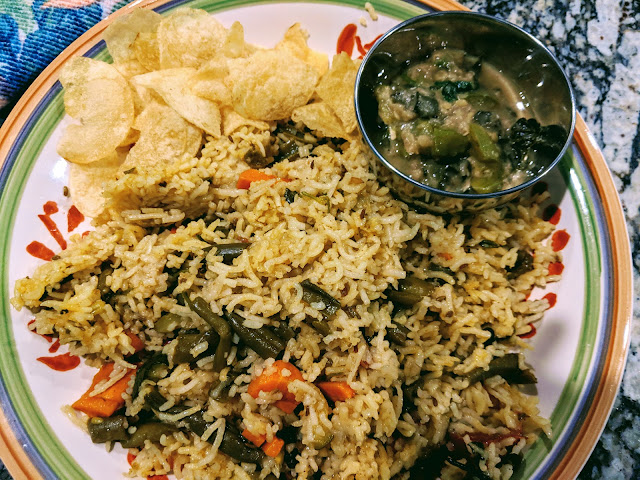

BEANS AND CARROT RICE WITH BELL PEPPER -KALE MASOOR DAL 


This is a very easy to make one pot meal. I made this rice using just 2 veggies-beans and carrots.

This is a no onion-garlic recipe. Go ahead and add these, if you prefer, for a more robust flavor.

This rice gets its flavor from freshly ground whole spices, slightly sauteeed in ghee and ground to a fine powder.

I paired this variety rice with some healthy Masoor dal. It packs in quite a protein punch, and does indeed make for a satisfying and filling dinner.

Off to the recipe

Beans and Carrot Rice:

Ingredients:

Basmati rice- 2 cups (cooked)
Beans- 1 cup (roughly chopped into bite sized pieces)
Carrots- 1 cup (cubed)
Turmeric powder- a pinch
Chilli powder-2 tsps (adapt it to your spice preference)
Salt- to taste
Ghee- 2 tbsps

Ingredients for the whole spices masala powder:

Cloves- 3 to 4
Cardamom pods- 4
Cinnamon powder- 1 tsp, or a small cinnamon stick
Coriander seeds- 2 tsps
Star Anise- 1

Preparation of the whole spices masala powder:

Heat 1 tsp of ghee in a kadai. Over a medium flame, roast the spices, until slightly browned. Once it cools, grind to a fine powder, and keep ready for use

Ingredients for seasoning:

Black cumin seeds/Cumin seeds- 1 tsp
Fennel seeds- 1 tsp

Preparation:

Pressure cook the basmati rice. Once the pressure subsides, open the cooker, and carefully spread out the rice in a wide plate, and fluff it with a fork gently, so as to keep the grains separate.

In a kadai, heat 2 tsps of ghee. When hot, add the spices for seasoniong, and saute for a couple of seconds. Tip in the chopped beans and carrot pieces. Add the salt, turmeric powder and chilli powder.

Add 1/2 cup water, and cook covered over a medium flame , until the veggies are cooked. They must be cooked tender, but not mushy. Add the prepared masala powder, and stir well, so the flavors get incorporated.  Switch off the flame.

Once the rice and the vegetable mix has considerably cooled down, mix them together. Mixing when they are hot, will end up in the rice taking on a very pasty texture.

Transfer to a plate and enjoy!!!


Bell Pepper-Kale Masoor Dal

Bell Pepper-Kale Masoor Dal
Masoor Dal , also known as Red lentils, is a very nutrient rich legume variety. It is high in iron and protein. When you pair it with healthy greens like Kale, you sure have a winner! This Dal brings with it the added  crunchiness of green bell peppers.

This Dal makes for a good side with rice and roti, paratha recipes as well.

Ingredients:

Masoor Dal- 1 cup (thoroughly washed and soaked)
Bell pepper- 1/2 cup (chopped into bite sized chunks)
Kale- 1/2 cup (roughly chopped)
Turmeric powder- a pinch
Green chillies-1 (add more, if you want the dal spicier)
Garam Masala- 1 tsp
Salt- to taste
Oil- 2 tsps

Notes:

1. Soak the Masoor dal for atleast 4 -5 hours prior to cooking. This lentil variety cooks pretty easily, and does not require an elaborate soaking ritual. Nevertheless, I soak the lentils for a longer period, because well soaked lentils make nutrients more bio available, and also helps in reducing the oxalate levels in some legumes.

2. I used Lacinato Kale for this Dal. Any leafy green, or a combination of greens, would work equally well.

3. Masoor dal, in isolation, or a combination of Dals like Toor, Moong would be delicious too.

Spices for seasoning:

Cumin seeds- 1 tsp

Preparation:

Pressure cook the masoor dal with the chopped Kale leaves, adding sufficient water. Once the pressure releases, mash the cooked dal-Kale medley, with the back of a  ladle, for a more creamier texture.

In a kadai, heat oil. Add the cumin seeds, and once, it splutters, add the chopped green chillies. Saute briefly, and add in the chopped bell pepper. Add salt, turmeric powder and garam masala. Cook covered over a medium flame, until the pepper chunks become soft.

Add the cooked Dal-Kale to the kadai. Stir well to bring everything together, making sure there is enough water.

Healthy flavorful Masoor Dal gravy is ready to be enjoyed with rice or rotis, of your choice.


Friday, September 21, 2018

Mixed vegetable spicy kootu

Mixed vegetable spicy kootu

Mixed Vegetable Spicy Kootu


This spicy kootu is basically a medley of veggies that I had on hand. It is made without Toor dal/Moong dal. So, it is relatively light on the tummy, than the traditional kootu varieties, which have Toor/Moong dal as the base.

The masala blend in this kootu elevates this humble vegetable medley to an entirely new level. Whole spices, and grated coconut slightly sauteed, do the magic in this dish.


Let's proceed to the recipe

Ingredients:

Green beans- 1/4 cup (roughly chopped)
Turnips-1/4 cup (skin peeled and chopped)
Kohlrabi-1/4 cup (skin peeled and chopped )
Onions- 1/4 cup (finely chopped) (optional)
Carrots-1/4 cup (roughly chopped)
Jaggery- a small lump (optional)
Turmeric powder- a small pinch
Salt- to taste
Oil- 3 tsps

Ingredients for seasoning:

Mustard seeds- 1 tsp

Ingredients for the spice powder (Kootu podi):

Dried red chillies- 2 (adapt it to your spice preference)
Coriander seeds- 1 tbsp
Channa dal- 1 tbsp
Cloves- 3 to 4
Cardamom pods- 4
Cinnamon powder- 1/4 tsp or a small cinnamon stick
Grated coconut- 1 tbsp

Preparation of spice powder:

In a kadai, heat 2 tsps of oil. When hot, add the ingredients mentioned for the spice paste. Roast over a medium flame, until slightly browned. Transfer to a plate, and let it cool. Once it has cooled down a bit, transfer to a mixer and grind to a slightly coarse powder, without adding any water. Keep this ready for using in the Kootu

Preparation of Kootu:

Take all the veggies, with the exception of onions, in a container, and pressure cook for 2 whistles. Once done, the veggies must be tender, and yet retain its shape. Overcooking tends to make the veggies too mushy.

In a kadai, heat a tsp of oil. Add the mustard seeds. Once it splutters, add the chopped onions. Fry for a couple of minutes, until the onions turn transclucent. Now add the cooked veggies, salt and turmeric powder. Add the prepared spice powder. If using jaggery, add it now. Stir nicely to mix everything.

Cook covered over a medium flame for 5 minutes, so as  to give enough time for the kootu to get infused with the flavors of the freshly ground spices.

Once done, transfer this healthy flavorful kootu to a serving bowl, and enjoy with rice or rotis.

Notes:

1. Mixed vegetable kootu can be made with any combination of veggies on hand.
2. Onions lend a robust flavor to this kootu. This kootu, flavored with this spice belnd, would taste good sans onion as well.
3. The sweetness of the jaggery really balances out the spiciness in this kootu. Feel free to leave out the jaggery, if you would rather prefer the kootu a tad spicy.

Tuesday, September 18, 2018

Whole Green Moong Dal Subzi

Whole Green Moong Dal Subzi

Whole Green Moong Dal subzi


I have traditionally used whole green moong in pesarattu and idlis. For a change, I tried making a North Indian style subzi with green moong as the base. The earthy flavor of the dal, combined with the flavorful spices, indeed makes for a satisfying side for rotis, parathas and pulav varieties.

Green moong is an incredibly good source of protein. This green legume confers anti inflammatory  and anti microbial benefits. It helps in lowering the LDL , thereby reducing the risk of heart disease.

Also, it is one of the easier to digest beans variety. The bio availability of moong beans can be increased by soaking them for a long period , prior to cooking.Fermented moong sprouts are amazingly nutritious, as well.

Let's proceed to the recipe

Ingredients:

Whole green moong- 2 cups (thoroughly rinsed and soaked for a minimum of 8 hours)
Onions- 1/2 cup finely chopped
Tomatoes- 1 (finely chopped)
Ginger - a small chunk (finely grated)
Garlic- 2 to 3 cloves( finely minced)
Chilli powder- 1 tsp (adapt it to suit your spice preference)
Garam Masala powder- 1 tsp
Cilantro- (for garnish)
Salt- as needed
Oil- 2 tsps

Spices for seasoning:

Cumin seeds- 1 tsp
Fennel seeds- 1 tsp
Cloves- 1/2 tsp
Cinnamon powder-a  pinch
Bay leaf- 2 (slightly broken)

Notes:

1. A longer soaking time helps in the beans cooking quicker. Also, it helps with easier digestion. I would recommend soaking overnight.

Preparation:

Pressure cook the moong dal for 3 whistles with sufficient water. Make sure to drain the water used in soaking, and use fresh water to cook the beans. Once the pressure releases, mash the dal with the back of the ladle, and keep ready for use.

In a kadai, add oil. When hot, add all the spices. Stir for a couple of seconds over a medium flame.

Tip in the finely chopped onions, grated ginger and minced garlic. Fry for a couple of minutes, until the onions turn tranclucent, and the raw smell of garlic fades. Now add the chopped tomato pieces and chilli powder. Once the tomatoes turn mushy, add the cooked moong dal and the needed salt.

Stir nicely to mix everything. Add the garam masala. Cook covered over a medium flame, so as to
bring all the flavors together.

Once fully cooked, transfer to a bowl, and enjoy this healthy protein brimming dish with rotis, parathas or pulav of your choice.

Notes:

1. If you have added salt while pressure cooking the dal, make sure to reduce the quantity of salt, that is added to the gravy.

Friday, September 14, 2018

Cucumber chutney

Cucumber(Vellarikka) chutney


Cucumber chutney


Cucumber is a low calorie food. A medium sized cucumber with its peel intact, is about 16 calories. But it is not left wanting in its nutritional profile.Its incredible water content gives it its superb hydrating quality. It is a good source of phytonutrients, as well, which makes it an anti inflammatory food.

Coming to the recipe, I had a couple of small juicy cucumbers lying in the fridge, and proceeded to make this healthy chutney as a side for the Oat dosas. It also makes for a great side, with rice and sambar/rasam.

Ingredients:

Cucumbers- 2 medium sized ones (chopped into small chunks)
Urad dal- 2 tsps
Channa dal- 1 tbsp
Green chillies- 1 (adapt it to your spice preference)
Cilantro- a handful
Asafoetida- a small pinch
Salt- as needed
Oil- 2 tsps

Notes:

1. I did not peel the outer skin of the cucumber, prior to chopping. The skin is a good source of fiber.
2. Adding some freshly grated ginger gives a nice flavor to this chutney. I did not add ginger. Go ahead and add it, if you like the flavor

Preparation:

Heat oil in a kadai. Add asafoetida, green chillies, urad dal and channa dal. Once the dals appear to change colour, switch off the flame, and transfer the fried ingredients to a separate container.

In a mixer, add the chopped cucumber and the cilantro leaves. Once the fried ingredients have cooled down, add them to the mixer as well.

Grind the above mentioned ingredients slightly coarse,adding the water required, to reach a chutney-like consistency. Add the needed salt.

Transfer to a serving bowl, and enjoy this healthy chutney with idlis/dosas.

Notes:

1. Adding tamarind is optional. If you would prefer a slight sourness, you may add it.
2. If you intend to have this with rice, reduce the quantity of water, as thogayals tend to be on the thicker side.

Monday, September 10, 2018

Horse gram Idli

Horse gram (Kollu) idli


Horse gram idlies with Tiffin Sambar


Want a change from the regular idlies? If the answer is "yes", then this recipe is something you should definitely try.

The star ingredient here is Horse gram, or Kollu, as it is known in Tamil. Ayurveda regards horse gram a food with medicinal qualities. This humble legume can boast of a superfood status,as it is rich in calcium and iron. It is also a very good source of protein. It is also touted as a legume which aids in weight loss.

Since horse gram has a heat generating quality, Ayurveda recommends its consumption during cold days.

Here is the recipe:

Ingredients:

Horse gram (Kollu)- 1 cup (thoroughly rinsed and soaked for at least 8 hours)
Urad dal- 1 cup (thoroughly rinsed and soaked)
Idli rava- 2 cups (thoroughly rinsed and soaked, with just enough water to fully submerge the idli rava). I soaked it for 3 hours
Fenugreek seeds- 2 tsps
Salt- as needed
Oil- as needed (preferably sesame oil for greasing the idli moulds)

Notes:

1. Horse gram tends to have a lot of tiny stones. So, I would recommend rinsing it thoroughly twice, and soaking it in water for at least 8 hours. A longer soaking time will enhance the digestibility, as  well as, making the nutrients more easily bio available.
2. Idli rava is the cream of rice, which is readily available at stores which carry Indian groceries.
3. Fenugreek seeds have a lot of medicinal qualities. They also aid in keeping the idlis soft.

Preparation of the batter:

In a mixer, grind the urad dal, horse gram and fenugreek seeds to a smooth fluffy batter, adding required water. Transfer to a large container.

Squeeze out the water completely from the idli rava, and add the fully squeezed out rava to the urad dal-horsegram batter.  Add the needed salt, and stir to mix everything well.

Keep the container covered in a warm place, preferably overnight, to assist in the fermentation.

On fermentation, the batter would have risen in volume, and you can see tiny bubbles on the surface.

Stir the fermented batter well,prior to making idlies. The batter can be stored in the refrigerator for later use.

Making idlies:

Grease the idli moulds with sesame oil. Gently pour the batter in the moulds,and steam for 15-20 minutes.

Once done, turn off the flame. Let the idlies cool down a bit, before proceeding to remove them from the moulds. Otherwise, there is a chance that the idlies may either break, or tend to stick to the pan.

Transfer to a plate, and enjoy with chutney or sambar of your choice. Even simple molagapodi will do the trick.

I served these nutritious idlies with Tiffin Sambar.

Notes:

1. Ensure that the idli batter is at room temperature before use. Idlis made with cold batter, removed right out of the fridge, tend to be on the harder side.


Pudalangai Stir fry

  Pudalangai stir fry The humble Pudalangai, or snake gourd, as it is called, is a nutrient powerhouse of key vitamins and minerals.It is a ...